Clinical Genomics
HLA-Dx™
HLA-Typing for Organ Transplant
Matches organ donors and recipients more accurately, improving transplant success rates by identifying compatible tissue types and minimizing rejection risks.
Precision Matching for Successful Transplants
HLA-Dx™ provides comprehensive HLA typing and post-transplant surveillance to improve transplant success rates and patient outcomes. From accurate donor-recipient matching to ongoing monitoring, HLA-Dx™ enables earlier intervention, reduces complications, and supports long-term survival and quality of life for transplant patients.

Ensuring the Right Match for Better Outcomes
Successful transplantation begins with precise donor-recipient matching. HLA-Dx™ delivers high-resolution typing of full HLA genes and additional transplant-associated genes, offering maximum coverage to support the best possible match.
Pre-Transplant High-Resolution HLA-Typing:
-
Covers up to 17 loci, including all exons for all genes
-
Sample type: Blood
-
Input requirement: ≥200 ng DNA
This comprehensive approach minimizes rejection risk and enhances patient survival rates.
Safeguarding Health After Transplant
The journey doesn’t end after transplantation. Continuous surveillance is crucial for detecting relapse, graft failure, or rejection before complications become severe. HLA-Dx™ offers advanced post-transplant monitoring powered by next-generation sequencing. Our post-transplant solutions include:
Engraftment Monitoring (Chimerism Analysis)
-
Tracks recipient vs. donor cell populations post–bone marrow transplant
-
Targets 202 bi-allelic SNPs across 22 autosomes for accurate detection
Solid Organ Rejection Monitoring
-
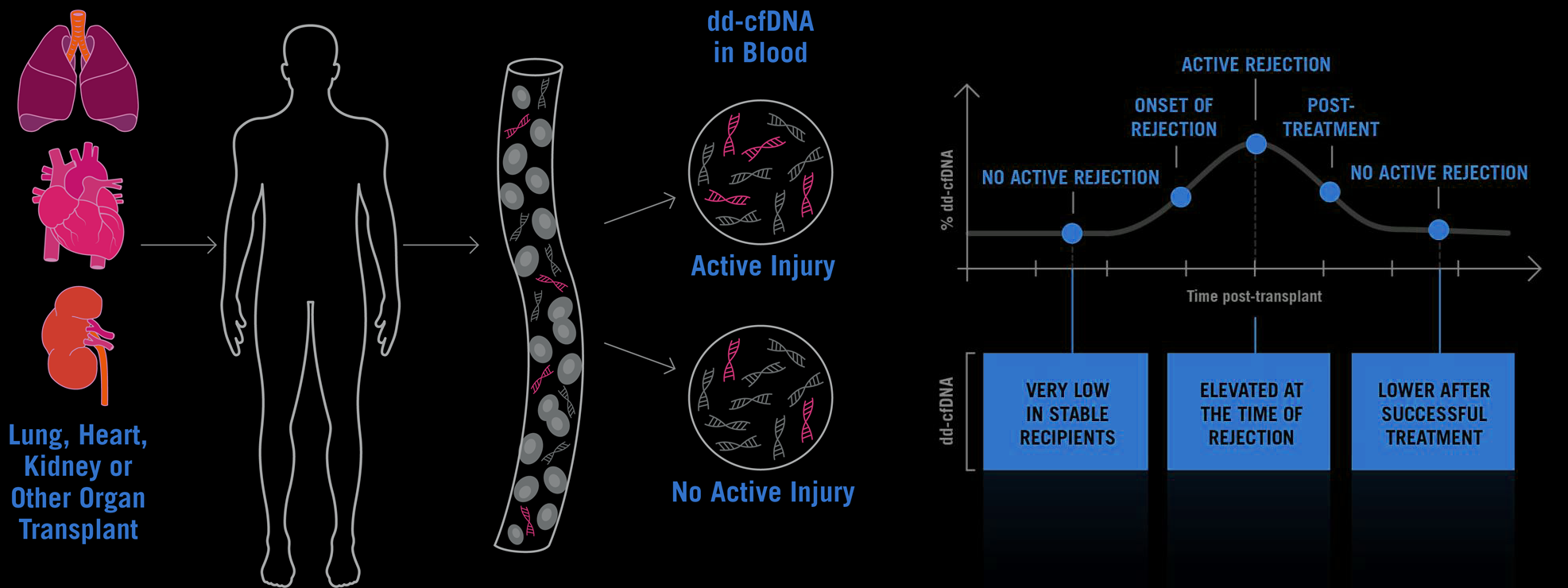
Quantifies donor-derived cell-free DNA (dd-cfDNA) to detect early graft injury
-
Uses low-input NGS for streamlined, precise surveillance

Clinically Validated Across Multiple Studies